While conservatives constantly complain that the mainstream media is deeply biased against their views — often (though not always) when reporters simply report basic facts — they fail to recognize the many ways that supposedly "unbiased" reporting often covertly adopts or assumes fundamental right-wing premises.
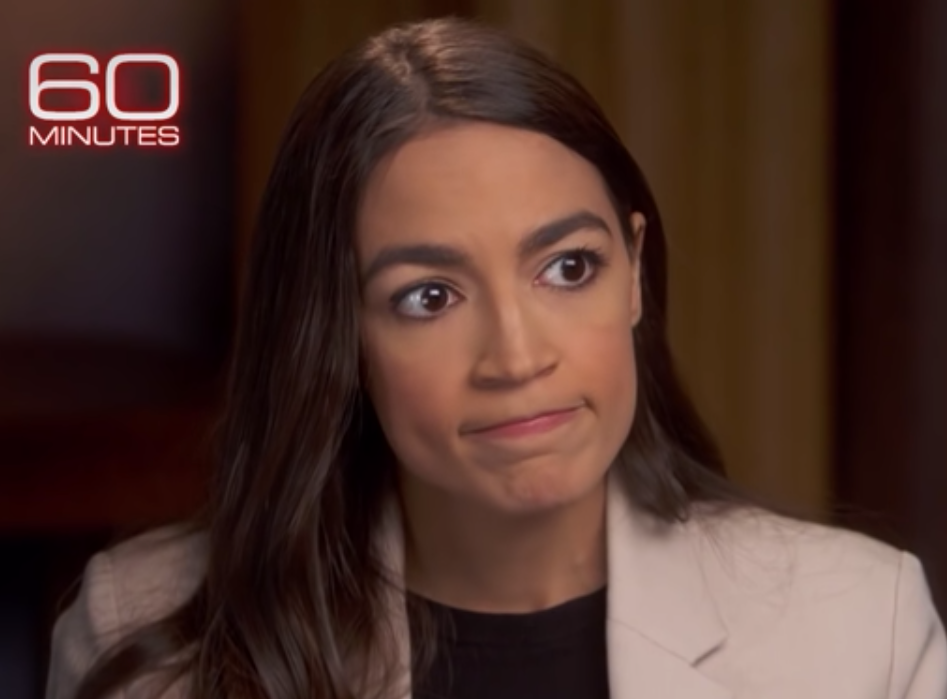
A key example of this phenomenon drew criticism Friday when Rep. Alexandria Ocasio-Cortez (D-NY) attracted attention for proposing that top tax rates be raised to 60 or 70 percent on the highest income brackets in a "60 Minutes" interview with Anderson Cooper.
Cooper said that she was talking about was a "radial agenda compared to the way politics is done right now" — and Ocasio-Cortez was happy to accept the label of "radical."
But as she had also noted, top tax rates in the United States were in the range she discussed — or higher — in the decades that many people, even and especially conservatives, nostalgically remember as a period of exceptional economic growth. It's not clear why returning to these rates should be considered "radical."
It is clear, though, that planting the idea that such a move would be "radical" — rather than a perfectly sensible idea if one that one that would infuriate the wealthy donor class — plays into the hands of the right wing.
Writing for New York Magazine, Eric Levitz pointed out that another reporter, Josh Kraushaar of the National Journal had what seemed to be a paradigmatic response among mainstream political commentators. "[Calling] for a 70% tax rate on the nation's most-watched news show a whole lot more politically damaging for" Democrats, he argued, than another congresswoman's boisterous call for Trump's impeachment.
But, Levitz pointed out, super high taxes on the wealthy are actually not particularly unpopular. He continued:
And yet, the fact that Susan Collins voted to sharply cut taxes on the rich in 2017 has not led nonpartisan news outlets to describe her as a far-right extremist. In fact, just yesterday, the New York Timesreferred to her as one of the Senate’s “most moderate members.” (Which is enough to make one wonder whether the overrepresentation of the affluent among national reporters — and the extremely rich, among owners of national media companies — might bias our political discourse in the upper class’s favor.)
All this said, it is conceivable that Kraushaar is correct; advocating for a 70 percent top tax rate could plausibly have political downsides for Democrats. But when journalists respond to Ocasio-Cortez’s proposal by declaring it self-evidently extreme and unpopular — instead of explaining who would be affected by the policy, and what effects economists believe it would have — they are creating such downsides, not neutrally reporting on them.
There are other examples of this phenomenon in which the media often adopts right-wing talking points without acknowledging that it is doing so. Pundits and reporters alike frequently assume for instance, that lowering the budget deficit is always a worthy goal, even when there are good arguments to believe otherwise. By accepting the basic premise, the supposedly neutral reporting can lend more credibility to the conservative ideological desire for slashing government spending than it deserves.