Judges block Republicans’ bid to dismantle Grand Canyon national monument
02 April
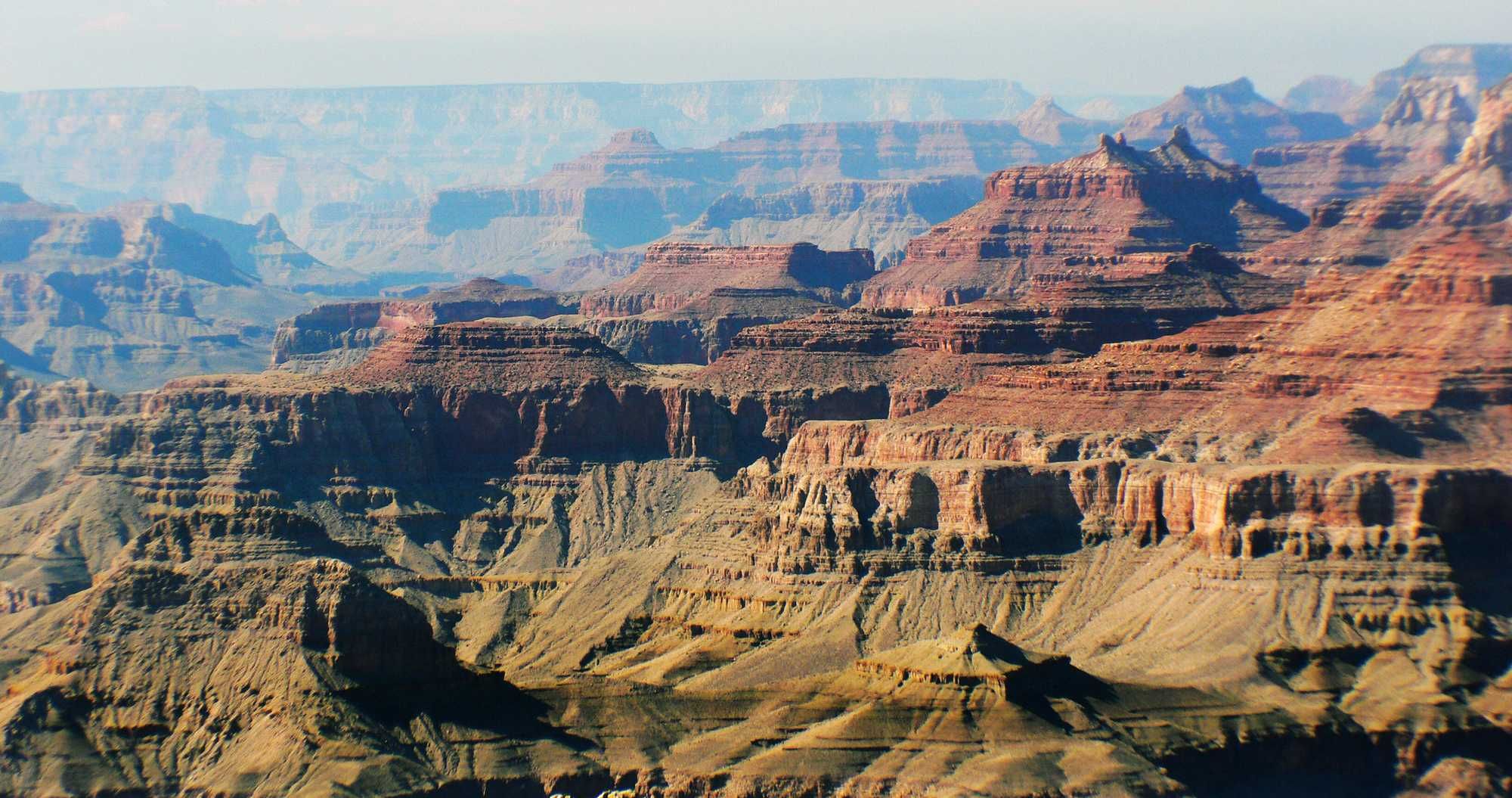
Public domain photo
Arizona’s legislative leaders can’t dismantle a new national monument near the Grand Canyon that they claimed would harm both the state and local governments, a federal appeals court ruled Wednesday.
In the memorandum ruling, a three-judge panel on the 9th U.S. Circuit Court of Appeals unanimously agreed with a lower court ruling made more than a year ago. Both courts ruled that Republican legislative leaders lacked standing to bring the lawsuit because all of the harms they claimed the monument would cause were speculative.
Republicans in the Arizona Legislature have criticized the creation of the Baaj Nwaavjo I’tah Kukveni — Ancestral Footprints of the Grand Canyon National Monument since President Joe Biden designated it in 2023. That designation effectively barred mining on the roughly one million acres of land near Grand Canyon National Park that make up the monument.
Mining on the land within the monument is already barred until at least 2032, but the new designation will ban it indefinitely.
Senate President Warren Petersen and former House Speaker Ben Toma, both Republicans, filed a lawsuit in 2024, asking the court to declare the creation of the monument unlawful and to set aside its designation.
Joining in the suit were State Treasurer Kimberly Yee, who is also a Republican, Mohave County, Colorado City and the town of Fredonia.
Arizona Attorney General Kris Mayes, alongside Gov. Katie Hobbs, both Democrats, intervened in the lawsuit to argue for the preservation of the monument.
Mayes celebrated the win on Wednesday.
“Today’s ruling is a victory for the people of Arizona and for the Indigenous communities whose ancestral homelands are protected by this monument,” Mayes said in a statement. “The court rejected every argument Senate President Warren Petersen, Speaker of the House Steve Montenegro, and Treasurer Kimberly Yee put forward. I am proud to have stood up to defend these sacred and important lands.”
Biden created the monument in response to advocacy from the Native American communities whose ancestral homelands are located in and near the Grand Canyon and who still rely on the canyon for natural and cultural resources that are significant and sacred to their communities.
In the unsigned memorandum, Judges Consuelo Callahan, John Owens and Michelle Friedland wrote that the Arizona Legislature couldn’t base its arguments for dismantling the monument on its “fears of hypothetical future harm.”
Callahan was appointed to the Ninth Circuit by President George W. Bush, while Owens and Friedland were appointed by President Barack Obama.
“It’s sad to see the Ninth Circuit kicked the can down the road,” Petersen said in a statement to the Arizona Mirror.
Petersen said he was disappointed that the court decided the challenge “came too soon” and failed to address the legislature’s claim that Biden lacked the authority to create the monument in the first place.
“Arizona families should not have to wait years while our land and economic opportunities remain locked up,” he said. “We will continue fighting to protect Arizona’s economy, jobs, and state sovereignty from this expansive federal land lock-up, including through any available avenues at the federal level. We are actively working with the Trump administration to undo this illegal land grab.”
In the challenge, the Arizona Legislature argued that the Antiquities Act of 1906, which Biden used to designate the monument, didn’t actually give him the power to do so.
Instead of addressing that claim, the courts ruled that none of the entities that brought the challenge could establish a concrete injury upon which they could base their case.
“Their alleged loss of future tax revenue depends on uranium prices being sufficiently high in 2032 (or whenever the pre-existing protections expire) such that third-party companies would choose to begin mining,” the appellate judges wrote. “But it is speculative whether the right economic conditions and incentives for uranium mining will exist so far into the future.”
The courts agreed that claims from the government entities that the creation of the monument was losing them tax revenue on geothermal and mineral leasing were also speculative.
“Plaintiffs fail to allege that any entity has ever sought to engage in ‘mineral or geothermal leasing,’ or that the monument land even contains those resources,” the judges wrote.
The Ninth Circuit found Colorado City’s argument that the creation of the monument endangered its future water supply equally unconvincing. Colorado City claimed that because its water was supplied from an aquifer beneath the monument, the federal government might decide to restrict access to that water in the future.
The judges wrote that Biden’s proclamation doesn’t alter existing water rights and “there is otherwise no reason to speculate that the federal government will ‘reduce Colorado City’s water supply,’ as Colorado City fears.”
The Ninth Circuit also disagreed with the Arizona Legislature’s claim that the creation of the monument strips it of its power to sell, lease and set royalty rates for state land surrounded by the monument. The judges wrote that the legislature could “continue to manage and dispose of state land as it sees fit.”
The court similarly shot down the Arizona Legislature’s claim that the monument designation harmed the state by forcing it to channel time and money to “passing laws, holding hearings, and publicly commenting” on issues caused by the monument.
“A plaintiff may not ‘manufacture’ an injury by ‘simply choosing to spend money,’” the Ninth Circuit wrote.
The judges wrote that the legislature had failed to show that it would have suffered any harm if it hadn’t passed laws, held hearings or made public comments relating to the monument.
The judges also dismissed the legislature’s claim that it, and the other plaintiffs, might lose money in the future due to increases in energy prices caused by the ban on uranium mining within the monument.
“Future energy prices depend on many unknown variables and the ‘unfettered choices’ of innumerable third parties,” the judges wrote. “Any future economic harm from higher energy prices caused by the Proclamation is accordingly far too speculative to support standing.”
The tribal nations with ancestral lands within the monument include the Havasupai Tribe, Hopi Tribe, Hualapai Tribe, Kaibab Band of Paiute Indians, Las Vegas Paiute Tribe, Moapa Band of Paiutes, Paiute Indian Tribe of Utah, Navajo Nation, San Juan Southern Paiute Tribe, Yavapai-Apache Nation, Pueblo of Zuni, and the Colorado River Indian Tribes.