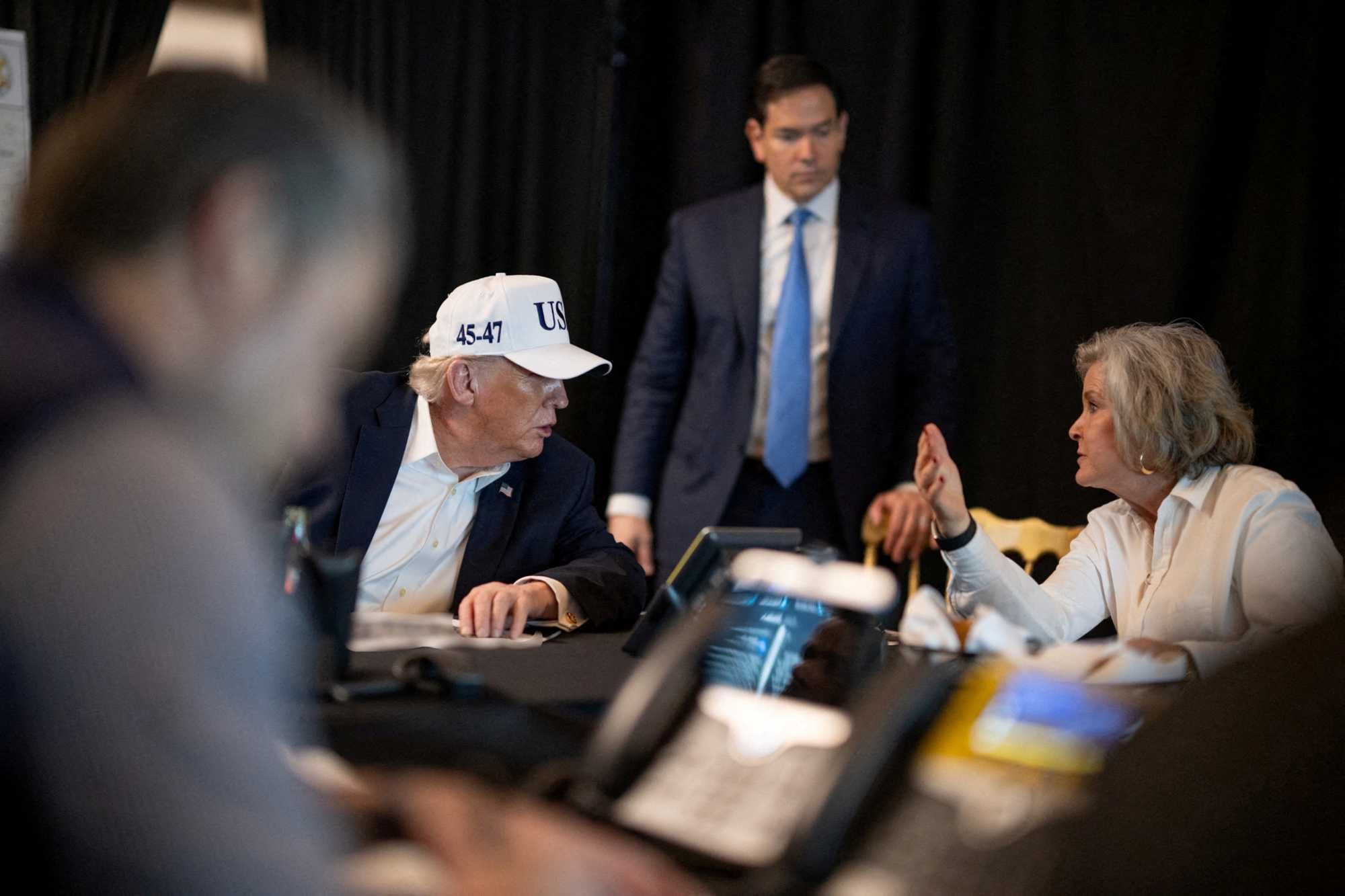
U.S. President Donald Trump is defending his war with Iran as a campaign against terrorism and extremism, repeatedly saying that the regime in Tehran must not be allowed to develop nuclear weapons. But critics of Trump's Iran policy, including retired U.S. Army Lt. Gen. Mark Hertling — former commander of U.S. Army Europe — believe that he is only adding to the instability in that part of the world.
Another critic is Virginia-based counterterrorism expert Erfan Fard.
In an op-ed published by The Hill on April 3, Fard argues that Trump's war could leave Iran with a militarized regime that is even more dangerous and fanatical than the current Shiite fundamentalist government.
"In public, the Shiite mullahs dominate Iran, but operational authority has, over time, concentrated within the security apparatus — the Islamic Revolutionary Guard Corps, the intelligence services and the security networks," Fard explains. "War has only accelerated this shift. Under external pressure, the regime has thus moved not toward reform or negotiation, but toward militarization. The decapitation of senior commanders and the targeting of main hubs has weakened the system, but it has also created an opening for radical elites to move up."
The U.S. has a long history of pushing regime change in Iran. In the early 1950s, Iranian Prime Minister Mohammad Mosaddegh, a socialist, was overthrown with the help of the CIA.
After that, the Shah of Iran, Reza Pahlavi, Mohammad Reza Pahlavi, ruled the country for many years before his overthrow in 1979. Pahlavi led a dictatorship, yet he favored a modernist view of Islam and had close relations with the United States and other western democracies. The Pahlavi government, in 1979, was replaced by a severe theocracy based on Shiite Islam and led by the late Ayatollah Ruhollah Khomeini.
Trump's war, Fard emphasizes, won't be the end of strict Islamist rule in Iran — and could make it even worse.
"Paradoxically, U.S. and Israeli air power may succeed in degrading the regime's forces and nuclear infrastructure while failing to reduce — even increasing — Tehran's leverage," Fard writes. "The result will be a weaker but more radical and authoritarian state sitting astride the Strait of Hormuz. This could prove even more dangerous to regional stability and the global economy than the system it is replacing."