the White House
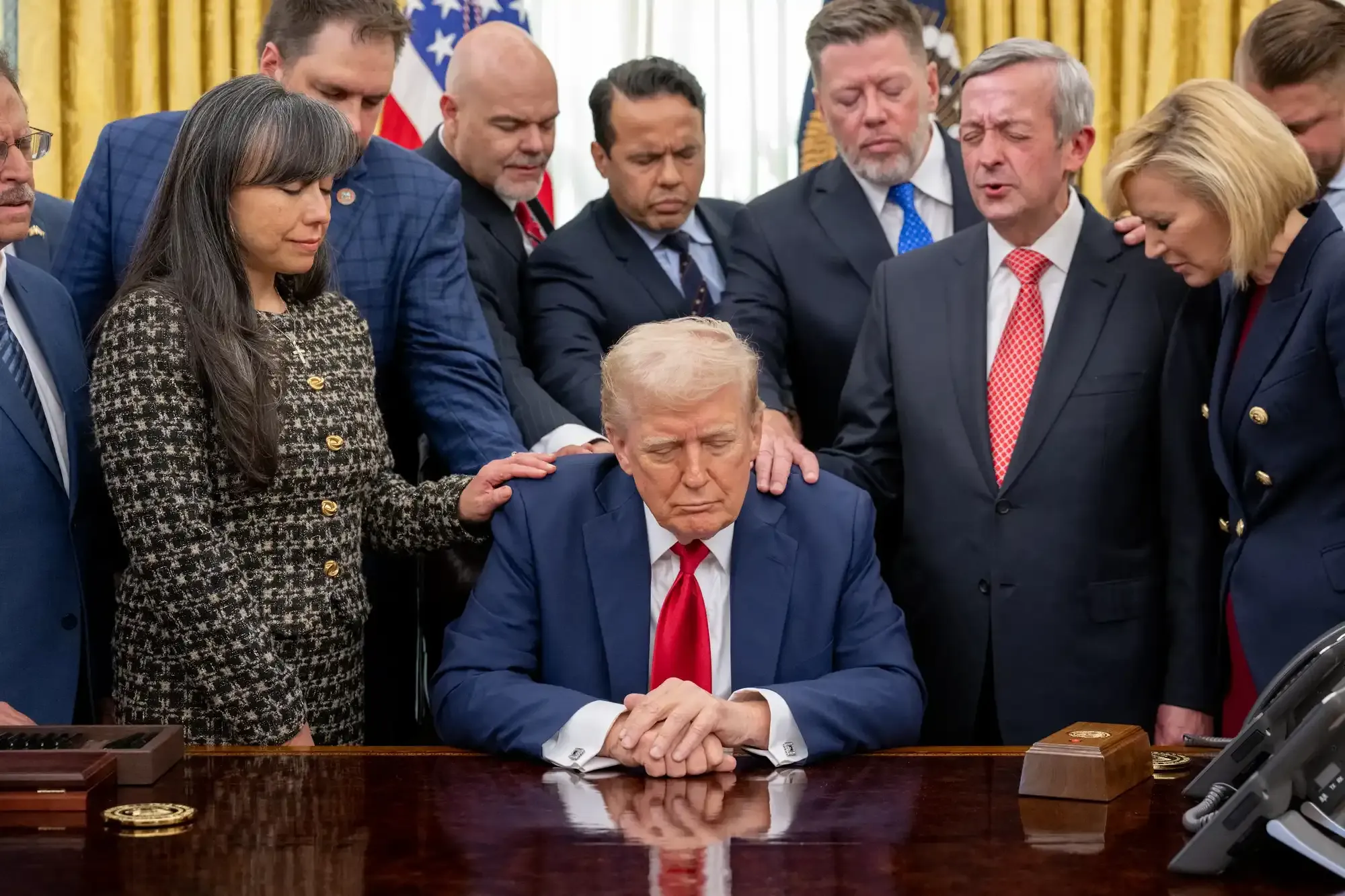
One of President Donald Trump’s core groups of supporters is fed up with him during his second term. A report from The Telegraph unearths Christians’ and other faith-based individuals' growing frustrations with Trump as a result of his response to the Iran war and damaging allegations of misconduct and corruption running rampant.
Doug Pagitt, one Minneapolis-based pastor, reported to the outlet that this Spring, a parishioner confessed to him, “Look, Trump’s been my guy. I voted for him three times. I’ve defended him, and I can’t do it anymore.” And Pagitt didn’t disagree, telling the reporter from The Telegraph, “I find him to be a moral void.” He says he tries his best to comfort his congregation members in the current political landscape, but has his own internal battles. “I don’t think there is a moral centre to him [Trump] or a moral frame. He’s just a transactional person that tries to get the most he can out of people,” he said.
In 2024, 80 percent of white Christians voted for Donald Trump. However, his support among religious voters has since declined across several denominations. Among white evangelical Protestants, approval has fallen from 78 percent to 58 percent since the start of his second term, signaling a significant shift among a group that has long been a key part of his political base.
According to The Telegraph’s research, many Christian voters have been turned off by some of Trump's actions, including when the president likened the daring rescue of a downed U.S. airman trapped behind enemy lines in Iran to the resurrection of Jesus Christ, invoking one of Christianity’s most sacred events to describe a military operation.
But Trump also has contradictory statements, such as his public disputes with Pope Leo XIV and a post featuring an AI-generatedpicture of the president as Jesus, which goes against the religious idea of not aligning oneself as a Christ-like figure.
David Buckley, a professor of political science at Boston College and director of the Boisi Centre for Religion and American Public Life, says the AI-generated image represented a major turning point. “What surprised me was that actually white evangelicals responded negatively in that week to the AI Jesus images. So we have really good evidence that that did actually sort of generate moral resistance from white evangelicals in his base,” he told The Telegraph.
Buckley added: “I do think that for that slice of his base, that episode might have signaled a kind of cooling of relations.”
Another point of contention is the correlation between devout MAGA supporters and their rhetoric and the Christian faith, which many of the latter debunk. Another issue many Christians find hard to ignore is the Epstein files and Trump’s alleged enabling of predatory behavior, and refusal to release the filings until legalities were involved. Daniel Dietrich, a pastor from Michigan, told The Telegraph: “[Trump] is named in the Epstein files tens of thousands of times, and I think it’s clear that he is right there in the centre of everything that was happening.”