A miscalculated strategy is keeping Democrats out of power: Harvard expert
03 September
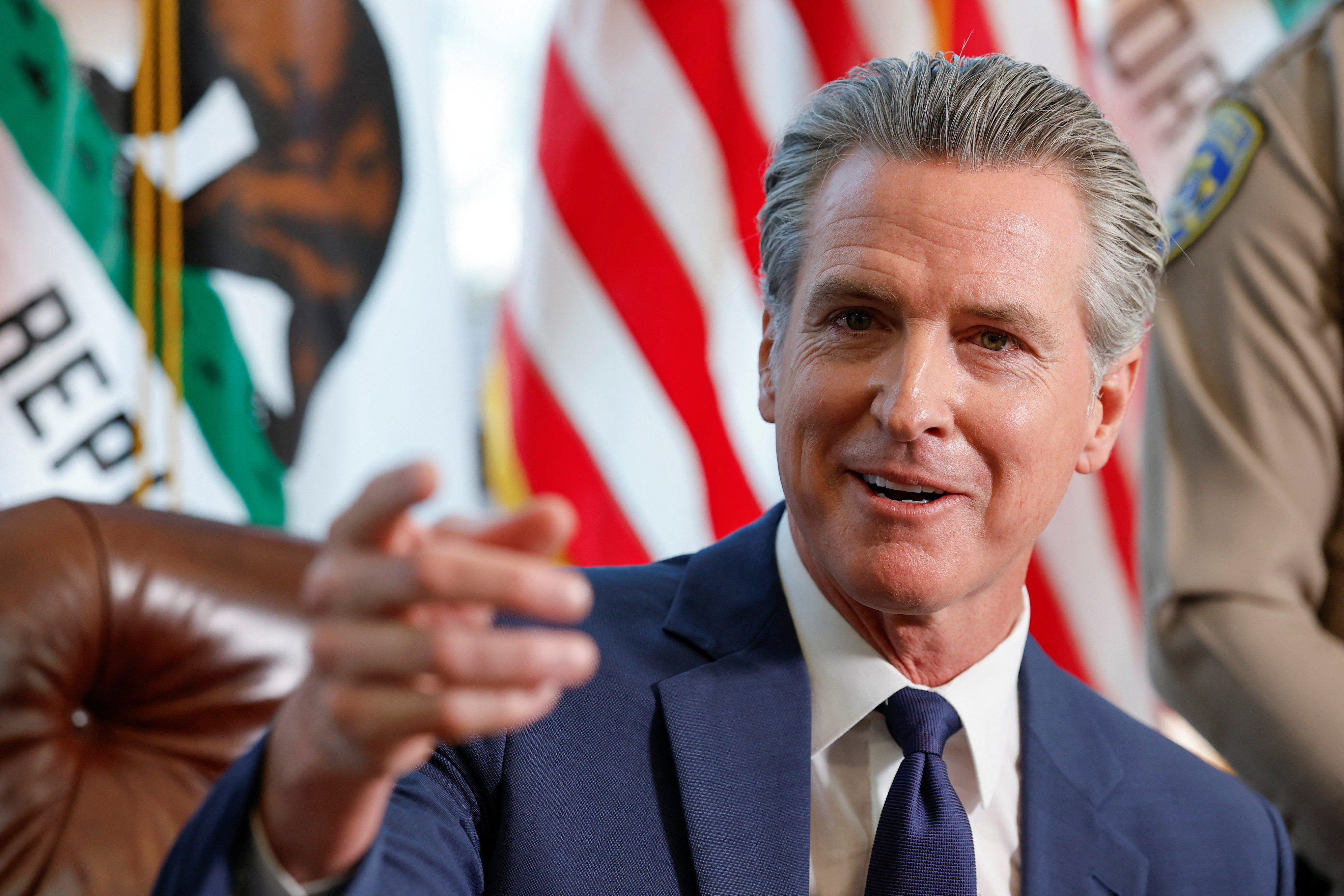
Gavin Newsom
How can Democrats reclaim power during the age of President Donald Trump? The answer to that question lies in this axiom: To shape the future, one must understand history.
For twenty years, Republicans won the popular vote in all but one presidential election. In each contest from 1968 to 1988, the GOP prevailed with nominees Richard Nixon, Ronald Reagan and George H. W. Bush.
Then, in 1992, the Democrats nominated Bill Clinton, and for the next twenty years that party won the popular vote in all but one election. Between 1992 and 2012, Clinton, Al Gore and Barack Obama won more votes than their opponents (in 2000 Gore lost in the Electoral College to George W. Bush after a prolonged post-election controversy).
The most recent three presidential elections, from 2016 to 2024, were those in which Trump either prevailed over a female Democrat (Hillary Clinton and Kamala Harris) or lost to a man riding on Obama's coattails (Joe Biden).
For Democrats eager to reclaim national power, this recent history raises an obvious question: What did the Democrats do right between 1992 and 2012 that it failed to do either between 1968 and 1988 or in the Trump era?
If you ask Clinton's top political strategist James Carville and top economic adviser Dr. Robert Shapiro, Democrats' two decade period of dominance can be attributed to Clinton focusing on the economy during his 1992 campaign and then delivering a balanced budget, four large surpluses and nearly 23 million jobs, more than any other president before or since. (As Shapiro recently wrote, Clinton accomplished this as he "convinced Democrats in Congress to double down with larger tax increases for wealthy people, raised the corporate tax rate, increased Medicare taxes for wealthy people, and hiked the federal gasoline tax.")
Democrats' rising democratic socialist wing, by contrast, argues that Clinton tacked to the center on key issues like free trade, criminal justice, welfare reform and allowing homosexuals to openly serve in the military. They further add that, while this centrism allowed Clinton, Gore and Obama to prevail in the past, it ultimately weakened the working class and other marginalized groups so much that the party now must move to the left in order to reclaim the political high ground.
Flash forward to 2026 and this debate continues to roil the Democrats, with profound implications for the future of America. If there is one point demonstrated by Trump's two electoral victories, it's that Democrats cannot win elections merely by being better than Trump. They have to offer a constructive and attractive alternative to what Trump's Republican Party offers the American people. But does that consist of following the legacy of the Clinton/Gore/Obama wing of the party or moving to the left as embodied by Democrats like New York City Mayor Zohran Mamdani, Rep. Alexandria Ocasio-Cortez (D-NY) and Sen. Bernie Sanders (I-VT)? Should they stick to the budget-conscious approach of Clintonism or the pro-Medicare for All, pro-basic income, pro-free food and overall robustly democratic socialist approach seen in Mamdaniism?
To explore this subject, I spoke with Dr. Theda Skocpol, a Harvard University professor who is Dean of the Graduate School of Arts and Sciences and Director of the Center for American Political Studies. She has also written classic books including "States and Social Revolutions," "Protecting Soldiers and Mothers" and "Diminished Democracy." If there is anyone qualified to contextualize American politics, it is Skocpol.
The following interview has been lightly edited for length, clarity and context.
ROZSA: Do you think Democrats actually agree with the socialist wing in their party?
SKOCPOL: No. For one thing, most people labeled socialists in the media or partisan debates are simply present-day New Deal liberals. They believe in a vigorous welfare state. Now, there are some people, in the Democratic orbit, including a very small number of people who came out of the primaries, who are labeled members of the Democratic Socialists of America. And the Democratic Socialists of America is off there with some pretty weird ideas in the concatenation of things that it supposedly officially endorses. But I don't think that much is going on, except people putting forth vigorous versions of an expanded welfare state on the Democratic Party left.
ROZSA: I think that's a very interesting way of phrasing it, and I think that's important as well. So my next question is: every election year, we see a struggle on issues and outcomes between traditional and more moderate Democrats and economic progressives. We're often told by progressives that Americans agree with them on the issues, but framing like socialism and democratic socialists gets in the way. Is it true that the majority of Democrats agree with them on issues like free grocery stores and guaranteed income? And if that's true, how come more of the candidates who propose those measures don't win their elections?
SKOCPOL: Well, you named a couple of issues where I don't think you could make the case that most Americans agree. You could probably make the case that most Americans like the sound of Medicare for All, although when they get a chance to vote for it in state referenda, they don't. I actually think that you gotta back off from this and recognize that politics has two important dimensions. One is issue stance, and that's what the more ideological formations on the left always wanna stress. And in a weird sort of way, they link up with these pollsters who run these polls that go out and people say, "Well, do you care about X? Do you think X is a good idea without offering any trade-offs or context for X?" But most politics is relational. It's about doing things that are meaningful and respected in your networks and peer groups.
And it's also heavily now kind of inflected with nationalized media sensational identity battles. And on the latter front, the so-called democratic socialists and even most of the economic progressives just aren't in the game because they're a group of more privileged people who live in and around metropolitan areas or college towns. They may never have actually sat in a room, with many working-class people and listened to the way they talk or the way they care about things. Or more to the point, they just don't have relationships with them because geographic and social class polarization has become so great in the United States.
ROZSA: That makes a lot of sense, and I'm glad that you offered that clarification. So my next question is, Trump is described by many as a dangerous populist, and we argue that populism largely fuels his power. Do you think populism is also a danger on the left?
SKOCPOL: Well, I question the premise of this question. Am I allowed to say that?
ROZSA: Absolutely.
SKOCPOL: I believe, first of all, Trump is about Trump, and he embraces particular stances if he thinks they'll get him somewhere. And in 2016 and 2024, he made media-advertised promises that he thought were gonna appeal to disgruntled non-metropolitan constituencies. And they did. But we're seeing the real Trump in this second term. He's mainly interested in his own, as they say, vanity projects, but also building just stupendous grift fortunes for people in his family and his immediate networks. And he's delighted to be aligned with the richest mega billionaires and trillionaires who happen to be pushing forms of investment in AI and other tech-fueled stuff that requires government contracts and all kinds of special breaks in government regulation. I mean, that's what he's doing, and that's the real Donald Trump.
ROZSA: That is a very important point. I guess my follow-up then is why is Trump so often mischaracterized as a populist?
SKOCPOL: Well, because most analysts and social scientists — how to put this in a non-insulting way — are bought into the hopeful delusion that popular opinion drives what happens in politics. If you look at actual policy, at actual things governments do, I don't believe that's more than partially true. And so it is true that especially in his rise and in his surprising reelection, after all that happened, he had blue-collar support, although it's defined mostly as people without college degrees, which I think is not exactly a class definition. It's more of a status definition. He had those votes in elections where he made promises that were lies, essentially, and I think he knew they were. I think he's savvy. I don't think he's stupid.
I think he knew they were lies. And I don't think that means that the people who bought those lies, especially in a media system where they may hear nothing but supposed facts supporting those lies, can be attributed to the driving force of Trumpism. I see Trumpism as much more of a concatenation. And in that concatenation, this charlatan, who's not an unknown figure in American culture and politics, has been pivotal.
ROZSA: So the second part of my question was, is populism also a danger on the left? What are your thoughts there?
SKOCPOL: Well, I don't know what populism is, but if it means paying attention to the needs and hopes and values — I wanna include values in that — of ordinary working people, people who are working for a living for wages and salaries, I don't think it's a danger. I don't think we have much of it, actually. And just proclaiming yourself as a populist, or as some of the democratic socialists do, doesn't change the fact that in many cases they come from and get their votes almost entirely from college-educated factions. Now, I'm part of a college-educated faction myself, so I'm not saying we don't count, but that's a very strange form of populism.
ROZSA: Okay. So my next question is about how do you solve the elephant in the room in terms of how robots have been taking blue-collar factory jobs for decades, and now we're on the cusp of them taking the majority of white-collar jobs in terms of AI. How do we solve for that, especially in terms of what you know about previous issues like this in American economic history?
SKOCPOL: Well, when things spread into the middle class, you're gonna get a political explosion. And that's what's happening now. I think we're at the early stages of it. I have no idea how it's gonna play out because it's happening at a time when faith in government's ability to do things effectively, to create regulatory frameworks for capitalist processes, is at an all-time low, and deservedly so. We just don't have a lot of examples of effective governance in this sphere and many others, including world affairs, that we really need at this point. The United States is in trouble because we just don't have a politics and a governance capable of supporting managed change. And this is a big one.
ROZSA: Now, that brings up a very interesting possibility. Is capitalism still a workable system?
SKOCPOL: Well, we have to make distinctions. I am not convinced that we have. I'm not quite sure what you mean by capitalism, but the definition would be free-market competition. And we haven't had that in the United States for a very long time. We've had regulated capitalism, and now we're devolving into patrimonial corrupt capitalism, which is barely capitalism. I mean, we have a system right now in which our leading-edge business entrepreneurs are really settling for a system of carrots and sticks in which they contact the ruler to get favors and exceptions. And those favors take the form of government contracts, especially. So that's not unheard of in the United States. I mean, a lot of what came out of the Civil War was a government contracting system that was fully exploited by the robber barons.
And now we've got capitalism on steroids. So I don't know how capitalist a system it is, but I think there are a lot of people out there who wanna say capitalism versus socialism. And I think if they say that, they're kidding themselves. Because I think a lot of them, ordinary Americans, have no idea what those abstractions really mean. And they also are gonna say, "Well, if what we've got right now is capitalism," which by the way, I personally analytically don't think it is in any pure form, "if what we've got now is capitalism, I'll take the other one."
ROZSA: So my next question refers to the movie "Primary Colors." There's a scene in that film where the Bill Clinton analog is talking about concerns regarding jobs being outsourced and the loss of manufacturing in the United States. And there's a quote he says that I've always thought was weirdly insightful, and I'm curious if you agree. He said, “Here's the truth: No politician can reopen this factory or bring back the shipyard jobs or make your union strong again,” Stanton says. “No politician can make it be the way it used to be, because we're living in a new world now. A world without economic borders. A guy can push a button in New York and move a billion dollars to Tokyo in the blink of an eye. And in that world, muscle jobs go where muscle is cheap, and that is not here. So if you want to compete, you're gonna have to exercise a different set of muscles, the one between your ears.” And then he proposes affordable lifetime education so that American workers can be trained for the jobs actually being created in this country.
Do you think that is still a plausible rebuttal to the Trump argument about bringing back manufacturing jobs through high tariffs?
SKOCPOL: Well, it's certainly a totally plausible rebuttal to that lie of a promise. I think we need to be careful because I don't buy the idea that the only choice is bring back the 1950s factory jobs versus constantly put people through retraining programs. Think about that for a minute. How appealing would you find that? We have a much more service-based economy now, and we have all kinds of community and public needs that could be met through workers who cannot be replaced by AI. So there are plenty of things we could do to invest in new, community-relevant, as well as economically viable, forms of work, and family life melded with work. I don't know whether we're gonna do that, but it is certainly true that anybody who says the factory jobs, the mining jobs, are coming back is totally out to lunch.
And at this point, we're at the point where a lot of the jobs middle-class people took to sustain themselves are threatened.
ROZSA: All right. And now my last question is: is there anything important that you'd like to say that I haven't given you a chance to say with the questions I've asked so far?
SKOCPOL: Well, it's just to realize that any big political phenomenon, certainly Trumpism, is a coming together of separate strands that may be quite odd combined, but it's the combination that has the power. And I do think that combination was an evisceration, especially of the Republican Party, by wealth holders who wanted little from government except contracts and no taxes and no regulation. They also believed that Trump was appealing to people who were afraid of ethnic changes and racial changes and generational changes in this country, and they were afraid of those things and resentful about the hollowing out of so many communities outside the big cities. But that combination came together to fuel the rise of Trumpism, and now it's coming apart because the whole top-down part of that has turned into the most blatant kind of wealth over regulation of government spending and actions through Trumpist patrimonialism.
Patrimonialism is the oldest form of rule in the world, and it is now melded with the newest kinds of technologies and inequalities.