Democratic socialists failed in the US a century ago but might prevail now. Here's why
31 January 2020
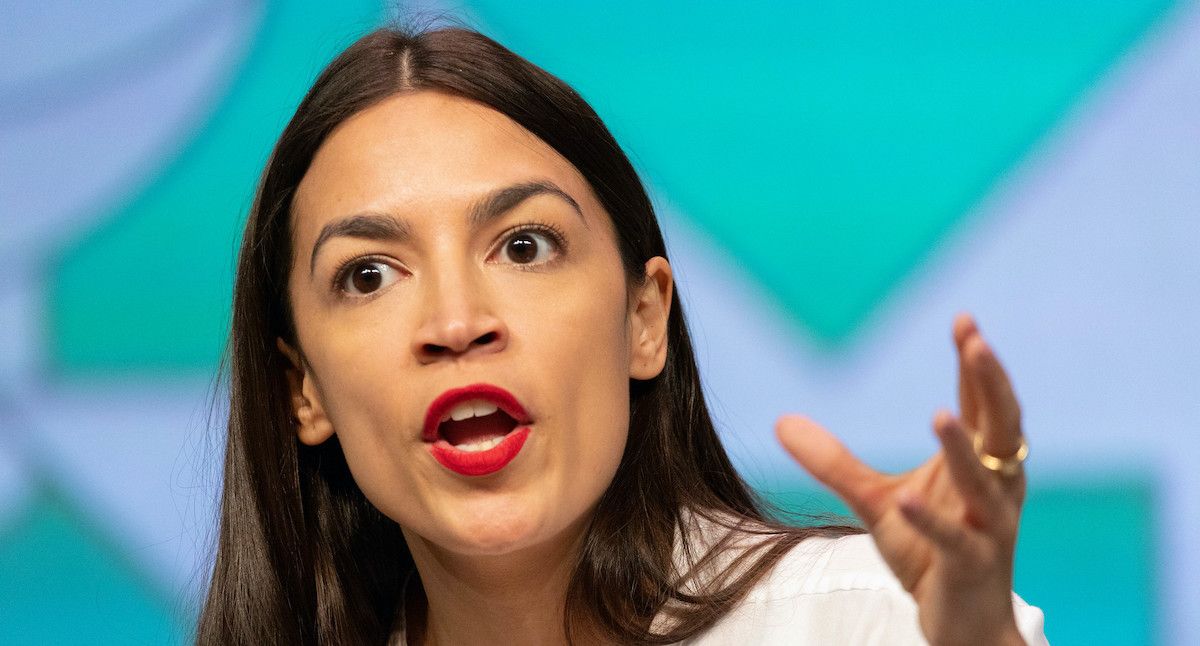
Sen. Bernie Sanders and his protégé, Rep. Alexandria Ocasio-Cortez, have openly embraced a description that most Democrats — including Sen. Elizabeth Warren — flatly reject: democratic socialist. Context, of course, is crucial: true communists, Marxist-Leninists and Maoists could spend hours explaining why Sanders and AOC are essentially capitalists, but in the U.S., the very use of the word “socialist” (whatever the context) has been carefully avoided for generations. Journalist Ross Barkan, however, explains in an essay for The Nation this week why he believes that a democratic socialist movement might have a better shot at succeeding in the 2020s than it did a century ago.
Barkan opens his piece by discussing a troubling time in U.S. history.
“Income inequality was surging, a racist president was ruthlessly deporting immigrants, and the world was struggling to recover from a brutal war,” Barkan writes. “The political scene, like America itself, was a deeply volatile, unpredictable place.”
Barkan, however, isn’t talking about the U.S. under President Donald Trump in 2020 — he is talking about the U.S. under Democratic President Woodrow Wilson in 1920. That year, Barkan recalls, the U.S. suffered the First Red Scare, and five members of the Socialist Party were thrown out of the New York State Assembly (Samuel Orr, August “Gus” Claessens, Louis Waldman, Samuel DeWitt and Charles Solomon).
A century later, self-described “democratic socialist” Sanders is running for president a second time. And recent polls indicate that he has a good shot at prevailing with Democratic Party voters in the Iowa Caucus and the New Hampshire Democratic primary.
Discussing Sanders’ 2020 campaign, Barkan explains, “If Bernie Sanders, a democratic socialist, is elected president of the United States, the Democratic Party will slowly become his party. And if he loses, inspiring still more (Democratic Socialists of America) recruits and fueling down-ballot victories, socialists can continue to win council, legislative and even congressional seats on Democratic lines, wielding tangible clout.”
It remains to be seen whether or not Sanders will receive the Democratic Party presidential nomination and what will happen in the general election in November, but as Barkan sees it, the democratic socialists of 2020 are facing fewer obstacles than the democratic socialists of 1920. Barkan notes that Julia Salazar, a member of the Democratic Socialists of America (DSA), is serving in the New York State Legislature — and that DSA members have the option of running on Democratic Party tickets. Ocasio-Cortez, in fact, is a member of the Democratic Party who has been active in the DSA.
“This time,” Barkan writes, “there will be no reactionary legislative leaders to unseat the new socialists, no Red Scare to feed a public frenzy against their anti-capitalist views. Salazar is a member of the Democratic majority, an ally of the progressive block, unlikely to lose an election anytime soon. The DSA members seeking to join her will be free to advocate for radical change. It’s a future that would have surprised the class of 1920 because Socialists never took over New York, let alone America.”