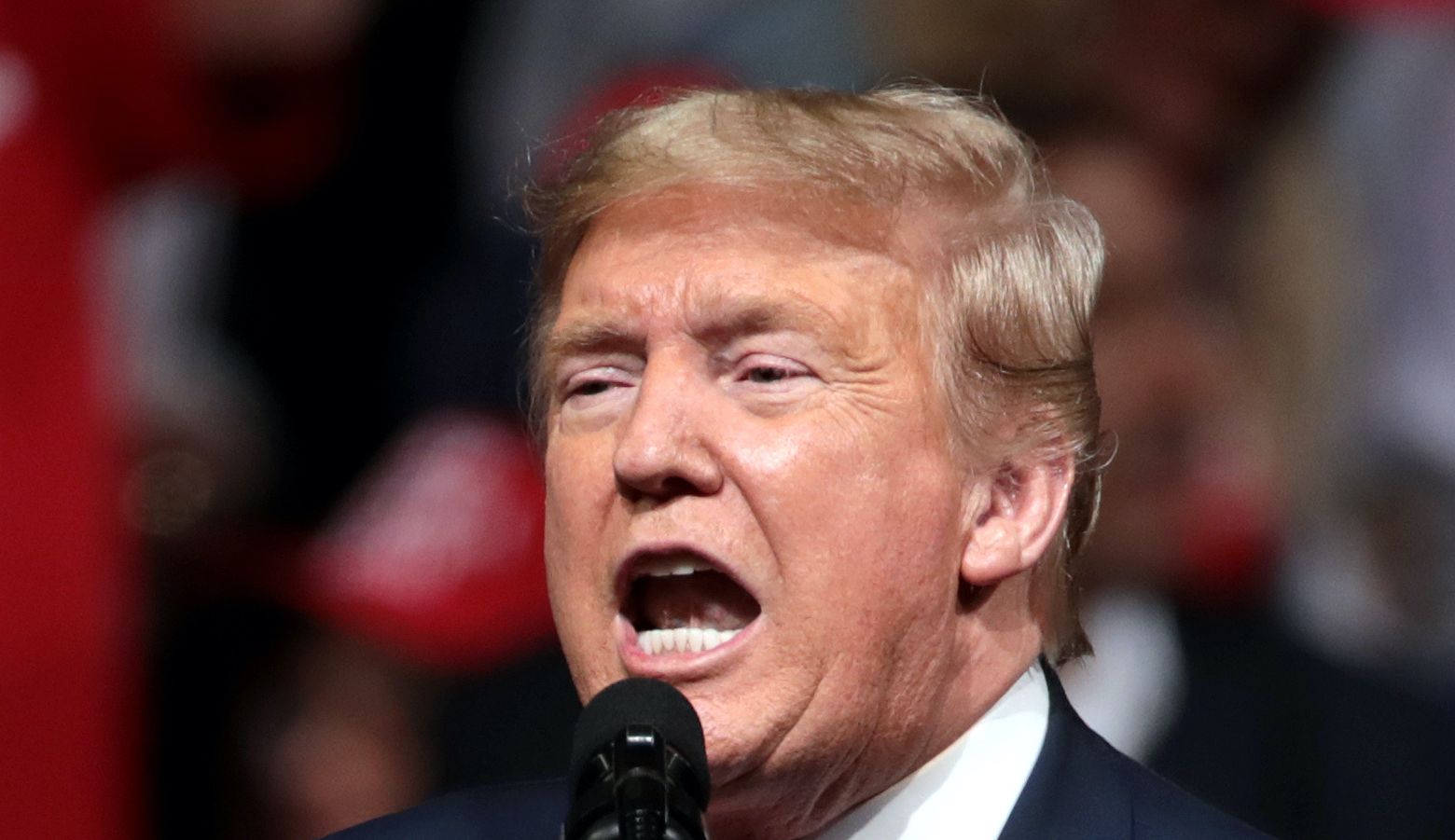
President Donald Trump has been forcefully pushing for a COVID-19 vaccine to be developed sooner rather than later, and he clearly hopes that if one becomes available before Tuesday, November 3, it will be the “October surprise” than enables him to defeat former Vice President Joe Biden. But liberal Washington Post opinion writer Greg Sargent, this week in his column, argues that an “October surprise” in the form of a COVID-19 vaccine announcement would likely fail to buoy his chances.
That's largely because of Trump's own behavior. After all they've seen, most voters simply don’t trust Trump on the pandemic.
“The public debate over Trump’s vaccine strategy has typically focused on his efforts to corrupt the vaccine approval process and the ways this will backfire by making it less likely that voters will believe him if he does go through with such an announcement,” Sargent explains. “But there’s a more fundamental reason this will likely fail for Trump. It’s this: whenever a vaccine is introduced, a long and complex process will follow that will require sustained, engaged, non-megalomaniacal presidential leadership, all conducted in the national interest — a concept Trump cannot begin to fathom.”
Sargent adds, “In short, even if Trump were to get public credit for an imminent vaccine, it’s likely the public would not trust him to manage what comes next.”
A newly released Axios/Ipsos poll bears out Sargent’s argument that Trump isn’t widely trusted when it comes to a first-generation COVID-19 vaccine. According to Axios’ Margaret Talev, “Six in 10 Americans now say they don’t want to take a COVID-19 vaccine as soon as it’s available, up from 53% at the end of August.”
Most Americans are obviously afraid of being infected with COVID-19 — apart from the conspiracy wingnuts who believe that the dangers of the novel coronavirus are being greatly exaggerated by Trump’s opponents. And they have reason to be worried. On Tuesday afternoon, Johns Hopkins University in Baltimore reported a COVID-19 death count of more than 200,000 in the U.S. and over 966,152 worldwide.
But as the Axios/Ipsos poll demonstrated, Americans are also worried about the possibility of a first-generation COVID-19 vaccine not being safe — especially if it is rushed.
“Americans don’t see the vaccine as a silver bullet right now,” according to Talev. “Many respondents in Week 25 of our national survey feel it’s risky and at least want to wait to see how others do. And only half are prepared to pay out of pocket for it. Just 13% say they’d be willing to try it immediately.”
Sargent, in his column, emphasizes that Trump hasn’t given Americans a lot of reason to trust what he has to say about the coronavirus pandemic.
“Trump’s problem is that he has long obsessed publicly over miracle cures,” Sargent writes. “Whether it’s hawking hydroxychloroquine like yet another two-bit Trump scam, or vowing the virus will go away in ‘warmer’ weather, or literally claiming it will vanish ‘like a miracle,’ Trump has promised for months that this or that will make it disappear — even as he continues dismissing it as largely defeated by his towering leadership. Many voters will likely see any vaccine announcement through this prism.”
Expert immunologist Dr. Anthony Fauci and other medical experts have warned that if the 1918/1919 Spanish flu pandemic is any indication, a second wave of coronavirus infections in the fall and the winter could be even deadlier than what has happened so far. In other words, the numbers currently being reported by Johns Hopkins — as tragic as they are — might pale in comparison to what Hopkins will be reporting six months from now.
Sargent interviewed Dr. Tom Frieden, former head of the Centers for Disease Control and Prevention, for his column — and according to Sargent, Frieden’s comments are a reminder that a “miracle” isn’t just around the corner.
Frieden told Sargent, “There are still a huge number of unknowns. We don’t know if the vaccine is going to work. We don’t know if it’s safe. We don’t know which vaccine will work better than the other. We don’t know which groups will be protected.”
The former CDC director warned, “There’s no fairy-tale ending to this pandemic. We’re going to be dealing with it for a long time, even if we have a vaccine.”