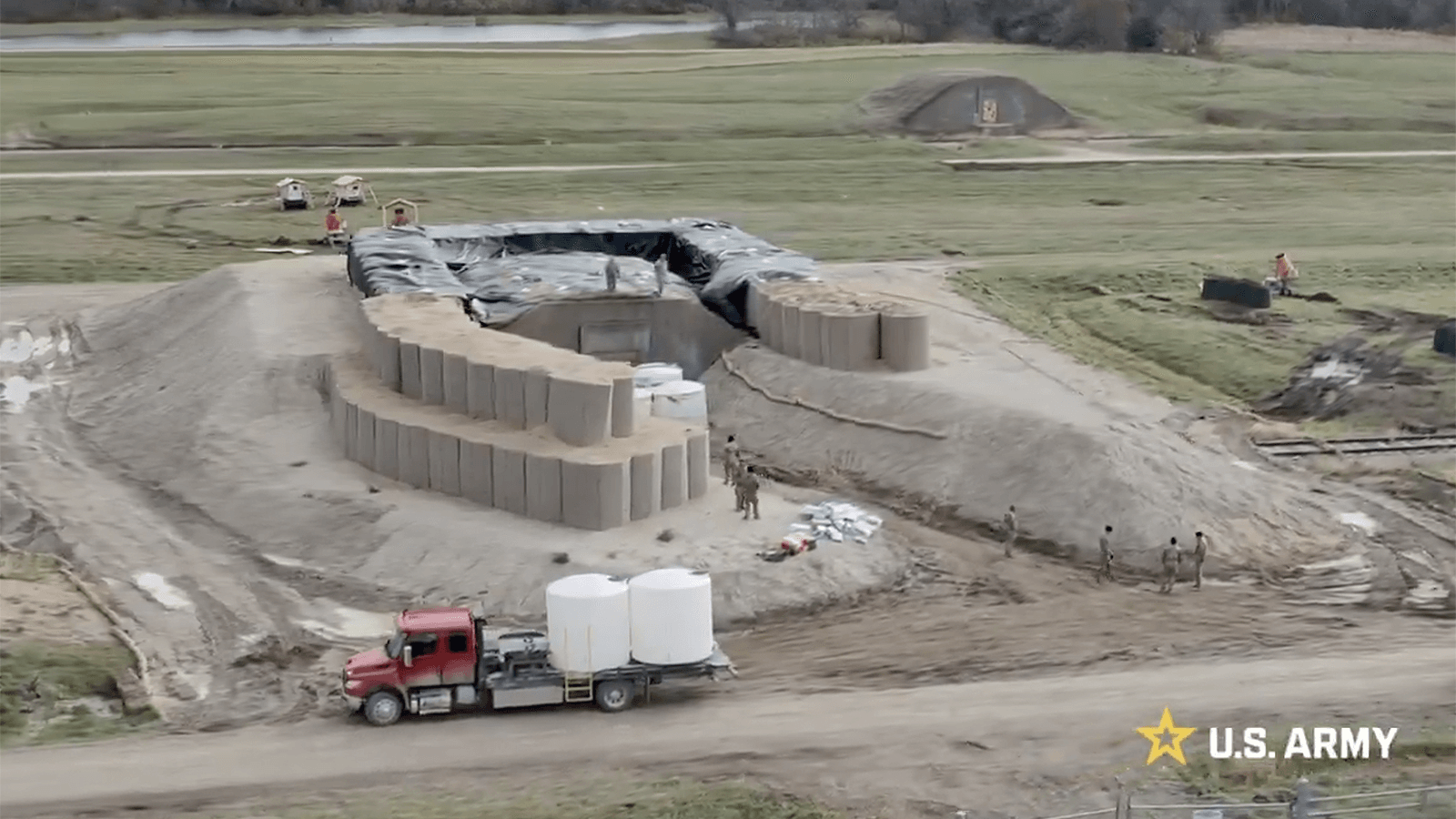
Toxic lead stockpile in Iowa that the Trump administration will blow up on Nov. 25, 2026 (Photo: Screen capture)
As the fallout continues from the Army's controversial lead azide detonation, a report from The New York Times alleged that the threat of the unstable material was known far earlier than the Trump administration let on.
Earlier this week, the U.S. military detonated nearly five tons of lead azide at a site in Iowa, raising widespread concerns about contaminating the air and nearby Mississippi River with toxic particulates. The Army initially claimed to have discovered in March that the material, largely used to make detonators, had crystallized while being stored long-term, making it highly unstable and meaning that it could not be moved to a different location for disposal.
On Thursday, however, The New York Times reported that concerns had been raised about the material much earlier under the second Trump administration than March, and that concerns had been raised about it well over a decade ago.
"More than a year ago, the Army contractor that runs the factory solicited expert help to deal with concerns over the unstable explosives at the site in Middletown, Iowa, records show. Those efforts were never completed," reporter Hiroko Tabuchi explained. "And as far back as 2009, the Army knew the barrels of explosives were becoming dangerous. That’s when the military had moved them to the Iowa plant from another facility, according to Robert Cekada, director of the Bureau of Alcohol, Tobacco, Firearms and Explosives. They were 'already old, degraded lead azide explosives, and already a concern for the military,' Mr. Cekada said on Wednesday."
The Times reviewed documents from September of last year, in which American Ordnance, the firm that manages the plant where the lead material was stored, "sought quotes from MuniRem Environmental, a waste management company, to use its technology to chemically neutralize more than 9,700 pounds of dangerous lead azide explosives stored in Iowa."
MuniRem submitted a bid for the contract the following month, but was ultimately told that it would not be given the job due to "safety reasons." Instead, the firm opted to save money by finding a solution to the issue "internally."
Tabuchi added: "The Army celebrated what Maj. Gen. Eric P. Shirley called Wednesday’s 'tremendously successful' detonation. Sensors set up by the government around the blast site did not detect noticeable levels of lead in the air; water and soil testing continues. But elected leaders in Iowa were asking how the Army had allowed nearly five tons of lead azide to deteriorate until it felt it had no choice but to trigger an enormous intentional explosion, risking contamination of homes and farmland."
“I will be using my position in the U.S. Senate to get answers as to why these failures took place, including investigations and hearings,” Josh Turek, the newly elected Democratic senator-elect from Iowa, posted to social media. “Iowans, as well as the American people, deserve accountability and the peace of mind to know that this will never happen again.”